
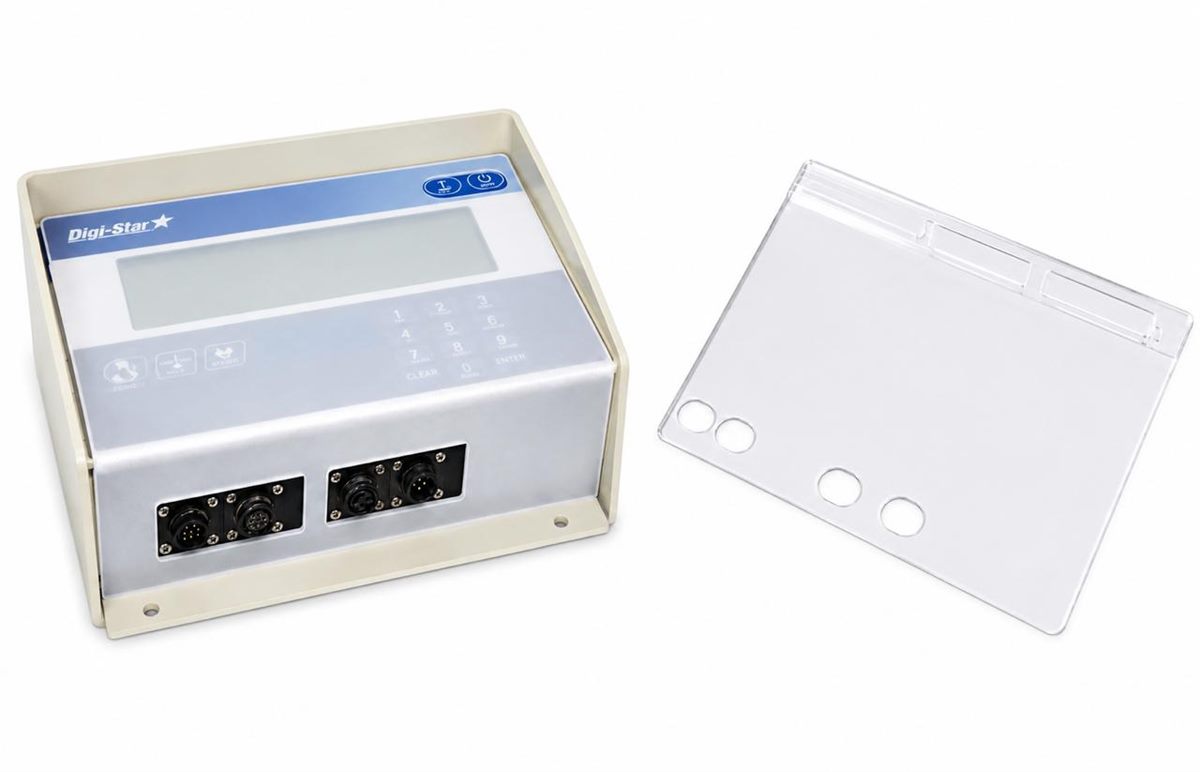
Acrylic guard
The weighing indicator has a numeric keypad. It is there for good reason — setup, calibration, adjustment. But it also opens a door: a weight can be typed in instead of weighed.
When that happens, deviation control on loading and delivery stops working. The system takes the typed number, compares it against the target and closes clean. The report flags nothing, because the error came in dressed as a measurement.
It is the worst kind of error a feedlot can have: the one that does not look like an error. The formulated ration stops being the ration delivered at the bunk, and the number on the screen still looks fine.
How it solves the problem
The guard is fitted over the indicator front panel. The numeric keypad is covered. With no access to it, the weight reaching the system is what the load cells measure — not what someone decided it ought to be.
This is not distrust of the operator. It is taking the option off the table, the same way an electrical panel gets locked: not because the crew is bad, but because mistakes and time pressure are real, and the cost of a pen fed wrong is too high to leave to discipline.
The cut-outs are customised
Every feedlot has its own routine. One wants the zero button available, another does not; one needs the function key, another works from the reading alone.
The guard is made with the cut-outs your case calls for — the buttons needed for daily operation stay exposed and the rest of the panel is covered. Whoever configures and calibrates still has access; whoever operates does not.
Developed by BULLTECN. The guard came out of a problem we saw in the field, not out of a catalogue. We manufacture it, sized for the indicator model in your feedlot.
Cables for Digi-Star scales
Cable and connector are the cheapest part of the installation and the part that stops the mixer most often. A loose connector, a cable broken by vibration or an improvised splice all show up as unstable readings — and are routinely mistaken for a failing load cell or a calibration problem.
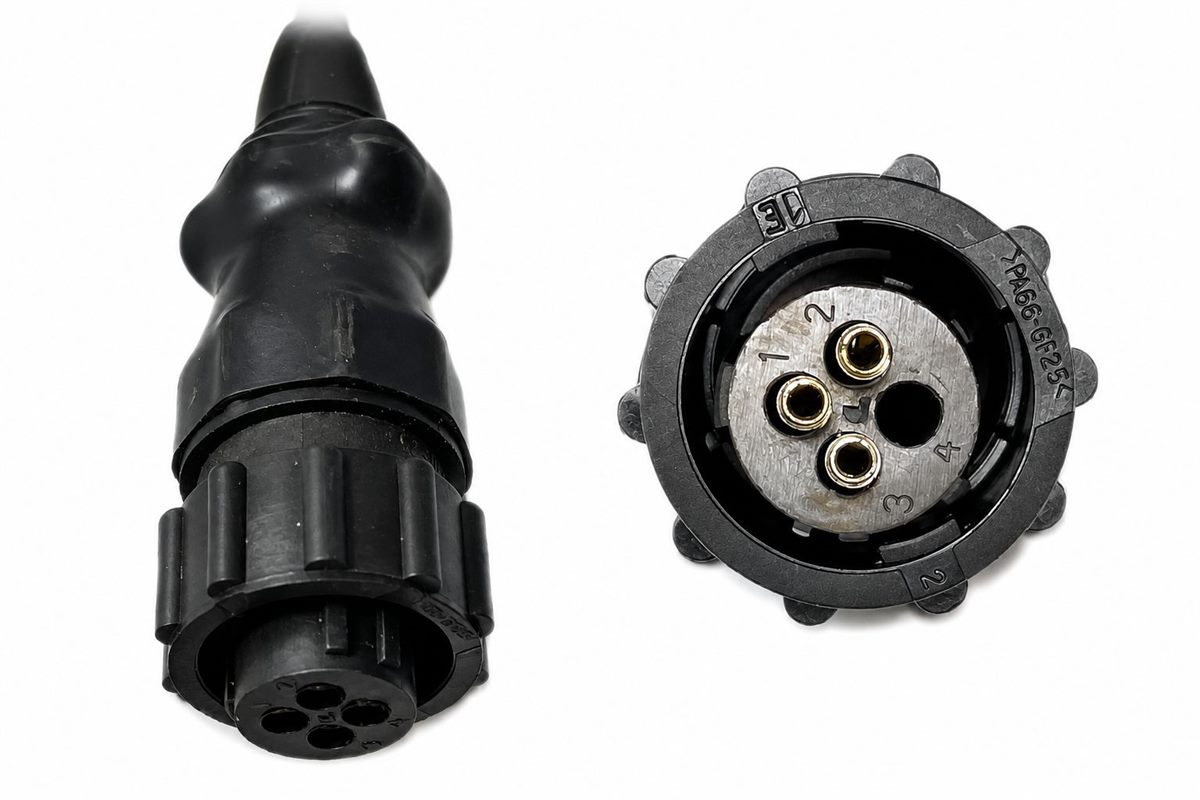
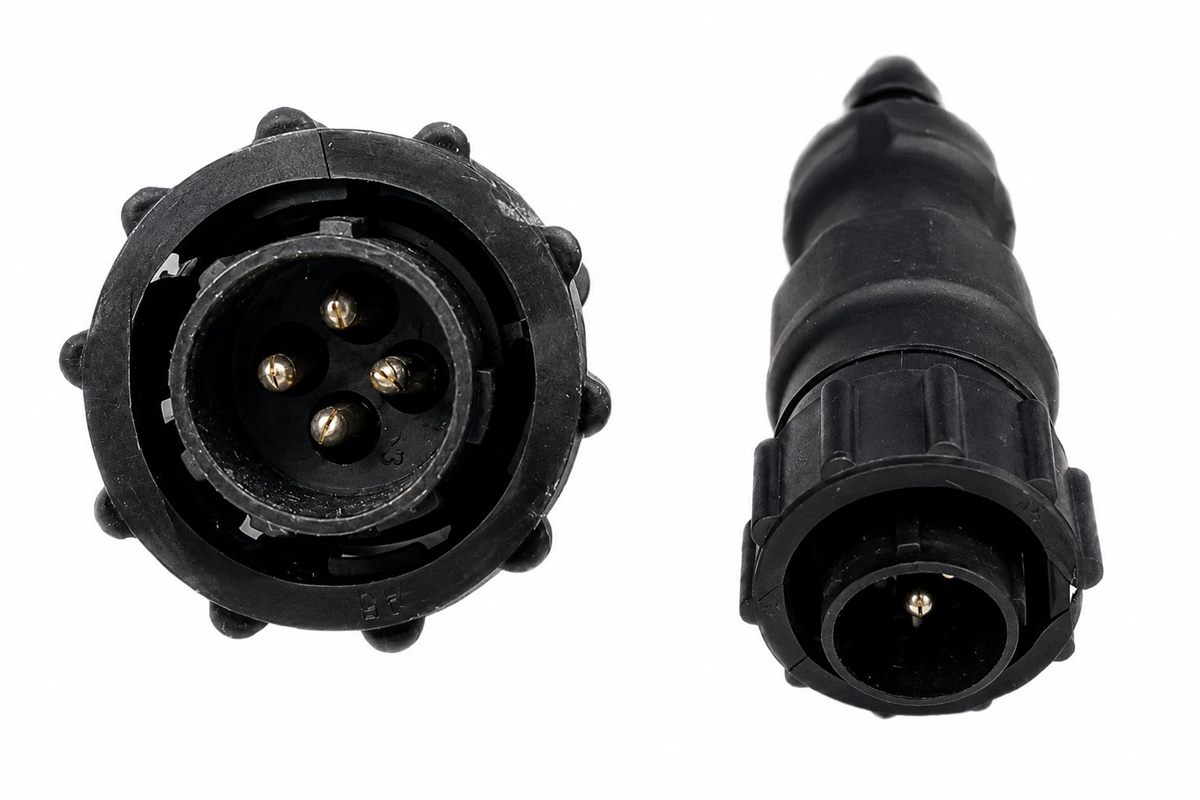
We make the cables to the length the machine needs, with the correct connector at each end. That avoids the mid-harness splice, which is where moisture gets in and the fault comes back six months later.
We supply the finished cable, not the loose connector. Need a cable that is not listed here? Check with us over WhatsApp — we look at whether we can cover your case.
Part of the same chain
These accessories do not stand alone. They belong to the same chain that scale calibration and the on-board computer hold up: weight leaves the load cell, travels through the cable, appears on the indicator and becomes a record in the management system.
If any link in that chain fails — or gets bypassed — the rest of the system keeps running and keeps producing numbers. The numbers just stop meaning what they should.